Showing posts with label reading. Show all posts

Saturday, 14 May 2022

Reading Group, Anyone?


Online book clubs have prospered in recent years. Accessibility, enthusiastic celebrity endorsement and, more recently, lockdown have increased reading and the desire to find the next book within a cosy community of like-minded people.


Unfortunately, despite the best efforts or good intentions of celebrities and "influencers" there will always be a healthy dose of scepticism from the public regarding their book recommendations. Being a celebrity/influencer is a business in itself and the world is built on networking, deals, promotion, freebies and brand awareness perhaps more than ever in history. The celebrity/influencer who has a genuine love of books and want to share it with the world is caught between a rock and a hard place by virtue of their career clashing with their passion. Who will truly believe their book recommendation when there is a suspicion that they might have been paid to promote it? However, despite having these nagging doubts we, the public, are still happy to join their online book clubs to find our next read, both parties aware of the issues yet gleefully ignoring the elephant in the room.


Reading Groups, particularly local reading groups which are linked to libraries, takes a virtual flame thrower to many of the concerns above, but I am getting ahead of myself. For those who have little to do with reading groups in the community, a reading group is a group of people who meet regularly to discuss a book they have read.  Of course, a discussion is best if it is the same book, so they are often linked to libraries. The leader of the reading group borrows the books from the library on behalf of the group, distributes them and the group meet up again in a few weeks to discuss the book (hopefully with a glass of wine, nibbles and a bit a of laughter sprinkled in).


The benefits of a reading group are:-

1) The books are varied and pushes the boundaries of your usual reading preferences (I am currently reading The Road to Wigan Pier by George Orwell, something I would never have chosen myself but it has opened my eyes to the harsh living and working conditions experienced by the mining community in the 1930s).
2) They are library books so are not being promoted or endorsed for monitory gains.
3) It provides books free of charge.
4) It's a way of making new like-minded friends.
5) It provides a conduit for all those thoughts and feelings you had about the book, yet also opens your eyes, heart and mind to all the things you had previously missed as a healthy discussion always provides another perspective - in this case as seen through another reader's eyes.
6) The meet-ups/social gathering gets you out of the house. Some may see that as a disadvantage as it is quite an enjoyable experience to surf the net looking for your next read with a mug of coffee in your hand. However, neither is exclusive to the other and is only limited by the time you have to read.

The disadvantages of a reading group:-

1) Feeling pressured to read a book by a certain date. However, most members feel this and understand. It is not uncommon for someone to give up on a book due to time constraints or lack of enjoyment. At least the reader does not feel they have wasted their money.
2) Most reading group do not focus on one genre (i.e. romance). You have to be prepared to read outside your preferred genre for most of the time. If this is not for you, then reading groups may not be either unless it is genre specific.


So do you like the idea of a reading group? Are you interested in setting one up in your local area? Why not go along to your local library and find out what is in your area? Reading does not have to be a solitary hobby. Discussing the book afterwards with a varied group of people can confirm your opinions or open your mind to a different perspective.... it can also make you think more deeply about your own beliefs, character traits and morals too!

Happy reading everyone!


Saturday, 3 July 2021

Audiobooks for the win!


Fasten your seatbelts, readers. I'm pretty certain this post is going to get some of you pretty riled up, but I've recently gone through an epiphany, and I'm going to bare my soul and share it here. In 2006 when my husband and I relocated across the country, I purged a giant portion of my books. In fact, I only hung onto the tomes that I knew I would read again, crying a little as I parted with the bulk of my childhood books and many of my other favorites. I’ve been carrying books around with me since I left my parents’ home, and throughout my life my books have provided me comfort, in addition to hours of entertainment.

But the wheel turns and attitudes change. Lately (oh, this is difficult to write) my favorite way to get story doesn’t involve a book at all. I hereby declare myself an audiophile. I adore audio books. There’s nothing like being read to by a professional reader, and audiobooks let me go about my day-to-day activities, like cleaning house and exercising, all the while listening to my favorite book. Although I have a well loaded Kindle, and I do read on it occasionally, lately I’m getting my story via audio.

Industry pundits say that audio books are experiencing unprecedented growth. Now, more than ever, there are choices galore and all kinds of content available. As I wondered why I felt such guilt over abandoning the physical books which I’ve loved forever, I realized it doesn’t matter how we get our story, how we absorb the words and sentences that take us to new worlds and expand our minds. Be it physical books, e-books, or audio books, at the end of the day it’s really about a tightly woven plot that resolves in a satisfying way and character relationships that involve us emotionally.

As I curl up on the couch with a cup of tea, headphones at the ready, I like to think that listening to a book is teaching me to use my brain in different ways, to focus on what I hear, and to make me a better listener. I will always have a soft spot for books, of hours spent in bookstores, of the smell of bound volumes, and of the way physical books enhanced my life will always be dear. I’ve just moved on and embraced a new way to get my story.  

How about you? Are you attached to physical books? Do you like listening to audio books? Drop and a comment and let me know.

Happy reading (or listening), everyone.

Terry


Saturday, 5 June 2021

Basic Instinct - friend or foe?

Instinct: the way people or animals naturally react or behave, without having to think or learn about it

Cambridge Dictionary

I read somewhere once that instinct is a subconscious lesson learned which surface to keep you from making the same mistakes. I know, from experience, that instinct plays a large role in our day to day lives. It can be helpful, it can be protective, but it can also be crippling. Perhaps I should add a disclaimer here - I am not a mental health professional, just a writer musing on life in general and with a blog post to fill. I am also vaguely familiar that there are many categories of instinct such as herd instinct. I am going to concentrate on that internal gut voice that inwardly communicates with you when you didn't ask it to. Now back go my blog post...

What has instinct got to do with creativity?  


There have been many times when I have been writing a scene and my instinct kicks in. I have a growing sensation that the scene is not going in the right direction. I know, instinctively, that I need a little more passion or a twist to add more energy to the plot. I did not plan the plot this way, but as I write my instinct tells me that this chapter just isn't right. I have never taken a creative writing course in my life, so it is not a lesson I have learned, but I know where I 
subconsciously acquired this instinct and it began on the day that I picked up my first novel to read.


It developed gradually, but mainly during my negative reading experiences when I have grown to dislike the hero or heroine, the plot direction or how the book is written. I have wasted countless hours reading a book I dislike just so I can finish it (I can't give up on a book, I have to finish it).  This is a good example of turning a bad experience to good use.


However, in my opinion, if negative experiences can develop an instinct that can be used in a positive way, negative experiences can also develop an instinct that, although trying to be protective, can have negative outcomes. For example, if you have received several rejections for your manuscript, your instinct might be to not submit the manuscript again. You have subconsciously learned rejection is painful and that you are not good enough to get published so why bother and be hurt again. This instinct is protecting you from future hurt and rejection... but I am not sure this instinct is always a good instinct to follow.  People say that every journey is made of small steps and that failure is a path to success. Sounds daunting and not much fun to tread.


It is not always easy to fight against our instincts. It is not always easy to know when to fight against them or when to follow them. I guess all we can do is consider the possible outcome and ask ourselves this question... will this situation put me in harm's way? If it won't, than perhaps we should question why our instinct is telling us to flee/reject/avoid/ignore and is there anything we can do to improve the outcome and be braver/more adventurous/more determined. 

Every event is a learning experience and can be positive and negative. Your instinct is there to help you and we must learn to let it help us... but we must also learn to not let it control us. After all, changing our thoughts and how we deal with our negative experiences could change our lives for the better.


What are your thoughts on instinct? Can you think of a circumstance when it has helped or hindered you? I would love to hear your thoughts.

Saturday, 27 March 2021

In which we discuss continuing education.

Often when  I’m in between books I take time to study my craft and hone my writing skills. My usual custom and practice is listen to chapters three and four of the audio version of Save the Cat Writes a Novel by Jessica Brody. Even though I already know the book by heart, listening to the chapters about character development and story structure never fails to get me motivated. But 2020 was a total pain in the you-know-what of a year, so for my third Olivia Sinclair book, I decided to try something different. Luckily, I was able to get a spot in The Tarot for Fiction Writers workshop over at thewriterscircle.com. 

The instructor, Kris Waldherr, not only writes amazing novels, she is also the artist who drew and created The Goddess Tarot deck. Her latest novel, The Lost History of Dreams is a fabulous gothic novel, which released to critical acclaim in 2019. Kris’s unique skillset lets her navigate the world of tarot and novel writing with deft. Her curriculum in the Tarot for Fiction Writing Class specifically helps students negotiate the obstacles all writers face when crafting story. (Anyone interested in any of Kris’s workshops can find out info here.) 

The tarot consists of seventy-eight cards, each depicting a nugget of the human condition. Arranged in certain order, the images can reveal patterns about  the day-to-day things we humans struggle with, as well as the things we celebrate. Taken as a whole, the tarot deck can be mixed and matched and arranged anyway the writer wants to jibe with their story, their scene, or their attitude about their work. 

During the course, we’re given examples of tarot spreads as reflected by known works of fiction. Each week we learn a new type of spread for character development, story arc, character arc, and even spreads for motivating the beleaguered writer who hits the proverbial wall. So while the tarot isn’t a supernatural fortune telling system (Write this book and you will have a best seller… Don’t I wish.), it’s definitely a way to memorialize and capture fleeting bits of humanity, which can then be layered into your story, your characters, and into the writing process itself. 

There’s something mysterious and lovely about tarot cards and their ancient symbols. As I shuffle the deck and look at the images, my subconscious mind comes to life and responds to what I see. Characters become more deeply known as their motivation becomes clear; the fog clears in my writer’s brain and I see the way out of a plot hole. The tarot, it seems,  is a magical shovel for digging deep on all fronts. And that, dear reader, has made my writing life very interesting indeed. 


Quick note about the above picture: Ace of Cups (divine grace in artistic endeavors), The Moon (mysticism, creativity), Ace of Pentacles (new opportunities, abundance coming)

How about you? Have you ever used tarot or any outside source to stimulate your inner storyteller? 

Until next time.

Terry


Saturday, 13 February 2021

You Had Me At Cozy!

Who out there has read a cozy? I'm the first to admit, I stay pretty genre-centric with my reading. I started reading cozies a few years ago as a way to escape the tedious amount of research and reading I was doing for my WWII novels. Helena Dixon's Miss Underhay Mysteries, followed by Posie Parker and Carmen Radtke's Murder at the Races. However, these are also historical fiction. I started to wonder, am I a book snob?

According to BookRiot, there is a big fat line between being a book snob and personal preference. (Whew!) I was just being picky. Okay, time to branch out. For me, choosing a book is a little like going to your favorite restaurant. You know what you like. You get it every time. So why chance a good night out by trying something different, something you might not like? However, trying something new, I reminded myself, is also exciting and refreshing.

I started reading contemporary romantic comedies. Shocker, I liked them. Sandy Barker, Nina Kaye, Aimee Brown, Julie Houston, Paige Toon... and Fiona Leitch. Now, Fiona Leitch has a particular skill of luring you in and blazing you with laugh-out loud comedy threaded into nearly every sentence that, at times, leaves you breathless. Yes, breathless. At least that is what I found when reading her self-pubbed murder-mystery mashups The Bella Tyson Murder Mysteries - Dead in Venice (with the tag: There are worse things than writer's block 😁) and Murder Ahoy. When I heard she'd written a cozy series for Harper Collins, I thought... okay, here we go!

I found Fiona's writing effortless. I'd started to flip back the pages and ask, "How'd she do that?" And this was between tears of laugher. The Nosey Parker Murder Mystery Series is no different. Here's the series blurb:


Ex-copper turned caterer Jodie ‘Nosey’ Parker returns home to Penstowan, the small seaside town in Cornwall where she grew up, after almost twenty years in London’s Metropolitan Police Force. With her teenage daughter in tow, and her slightly batty mother still living there, Jodie plans on having a quiet life running her new catering business. But she soon discovers that life in Penstowan is not as quaint (or boring) as she remembers. Missing brides, bodies in the shrubbery, annoying writers pushed off cliffs and movie star madness all conspire to get this not-so-amateur detective back on the case. Helped by her old childhood sweetheart Tony and hunky newcomer, DCI Nathan Withers, not to mention new member of the family Germaine the Pomeranian dog, finding the killer is bound to be a piece of cake. Murder, mayhem and much consuming of pasties will ensue, to prove that when Jodie’s around, murder is always on the menu…


I wanted to know more about Fiona, her writing, and how she comes up with this stuff! SO, I asked her!


Hi Fiona! I read and loved your Bella Tyson series, Dead in Venice and Murder Ahoy, how was writing the Nosey Parker cozies different than writing your other books? 

The main difference is that I’m not allowed to swear in the Nosey Parker stories… I’m kind of joking there, but actually it’s true: because I’m writing to contract, I’ve been far more aware of the market and of the audience I want to attract (many of whom don’t like the kind of strong language that Bella makes liberal use of). With the Bella Tyson books, I just kind of write what I want and hope it finds an audience; with Nosey Parker, I’m actively hoping to attract them. The other big difference is in writing for a hopefully long-running series. I’ve made sure that I’ve introduced a lot of secondary characters who are interesting in their own right, who I can use again and again in further adventures. In the Bella Tyson books, it’s mainly just Bella and Will who are recurring characters. I’ve also had to do a bit more world-building, setting them in a location (based on a couple of real towns) which I can use again and again.

Why are you so funny? No, really. I find I laugh my way through Fiona Leitch books, and I often wonder if you are this funny at home. Is your family constantly in stitches? 

My whole family is funny. I grew up in a household where there was a lot of laughter and playfulness. My mum, my sister and I regularly get each other into bouts of full on hysteria, where we’re crying with laughter and it actually hurts, but we can’t stop. My son and I have the same effect on each other. I suppose I AM funny all the time! Although whether my family are laughing with me or AT me is another matter… I used to want to be a stand-up comedian, until I actually got a really big debut gig through the BBC. It was the most terrifying experience of my entire life, and utterly cured me of the desire to ever do it again.

You know that saying, write what you know? You can plead the 5th here (meaning you don’t have to answer), but are your characters loosely or closely based on real people?


There is one character (in Murder Ahoy!) who is based on a real person, although (unbelievably, as she is a total monster in the book) a watered-down version. All my female MCs do have elements of me in them, I have to admit, although I wouldn’t say that I am quite as nosey as Jodie! Also in Murder Ahoy!, one of the other characters is based on a book blogger who I got to know after Dead in Venice came out, as she absolutely loved it and has since become one of my biggest on-line cheerleaders. I named the character after her and based some of it very loosely on her, but I was quite concerned because that character also turns out to be a bit of a monster and I was worried that she would be hugely insulted, but she loved it!

Who is your inspiration for Jodie, our detective MC? And what kind of research did you do to prepare?

Physically, I had the actor Sheridan Smith in my mind when I was writing Jodie, because I’d love her to play her in the TV adaptation (please let there be a TV adaptation!). In terms of her actual character, I used to work in an office with someone who was an ex-copper and she was incredibly nosey; whenever she saw something going down by the water cooler she had to get involved. It had been part of her job as a police officer, and she didn’t seem able to stop. It was actually quite annoying! But I wanted to make Jodie different to a lot of the cozy sleuths out there, in that she isn’t a complete amateur. I wanted it to be as believable as possible, without turning it into a police procedural thriller. In terms of research, I focused more on the locations (places that I know and love), and on the crimes in each book, rather than on Jodie herself. So I now know a lot about wild flowers in the North Cornwall area; Goldsmiths College art alumni (I went there myself, along with but not at the same time as people like Damien Hirst, Anthony Gormley, Damon Albarn and Mary Quant), and about the toxic properties of pufferfish. 

What is your writing process? Are you a sticky-note writer? Please say it isn’t so. I’ll be instantly jealous. Well, are you?


God no! I don’t get the whole sticky note thing. I never used to plan - I started off writing screenplays, and if you need to go back and rewrite things it’s much simpler with a script than with a novel (the word count of a script is probably about 25% of that of a novel). But I’ve found that I do need to outline novels, particularly when I’m writing a mystery; I need to know where the different twists and turns will be, where I’m going to plant the clues and the red herrings, and if I don’t plan it means I’ll probably be looking at a major rewrite. So I have an outline, sometimes quite rough, sometimes more detailed, but I will find as I’m writing that I have other ideas or I’ll deviate from it, it’s not set in stone. I think maybe the sticky note thing is helpful if you struggle with structure - it means you can write scenes and jig them around to fit - but I’m one of those annoying types who can just ‘do’ structure, so it seems like a waste of time to me.

What else are you working on?

I just finished outlining the next 3 books in the Nosey Parker series, so hopefully I’ll be writing them soon! I also have 3 other books outlined, romcoms rather than cozy mysteries, and I’ve got 2 others written that I’m trying to get out there. I’m pretty busy… 

Murder on the Menu is out now, as is the 2nd installment of The Nosey Parker series, A Brush with Death! A Sprinkle of Sabotage will be released next month. Buy here: mybook.to/Brush


Fiona Leitch is a writer with a chequered past. She's written for football and motoring magazines, DJ'ed at illegal raves and is a stalwart of the low budget TV commercial, even appearing as the Australasian face of a cleaning product called 'Sod Off'. After living in London and Cornwall she's finally settled in sunny New Zealand, where she enjoys scaring her cats by trying out dialogue on them. She spends her days dreaming of retiring to a crumbling Venetian palazzo, walking on the windswept beaches of West Auckland, and writing funny, flawed but awesome female characters. Find her on Twitter: @fkleitch

Thank you Fiona for taking time to answer my questions. As you can see, I'm pretty nosey too. So, readers, what genres do you read? Have you ventured out into the unknown and tried something new?  Are you a reformed book snob picky reader? Tell me about it.

Have a lovely day! 
Andie xx

Saturday, 9 January 2021

Books to read before you die

Every year I am asked the same question from close relatives and friends... "What do you want for Christmas?". I don't know about you, but I find this a tricky question to answer when the gift giver has a price limit a) because the things that spring to mind don't usually fit into a £25 or less bracket (ie a holiday to an exotic island) b) I am at that age when I don't want anything very much, c) what I do want I am rather picky about.

Does that make me sound awful or have I just said what most people feel when asked what they would like?

This year I looked to the internet in the hope it would remind me about a gift I thought I wanted earlier in the year but had since forgotten. "Books to read before I die" popped up and, after a little researching, I was confident that I would have an answer for my gift giver... ie a list of books she could choose from.

I soon discovered there are a lot of websites recommending books that I should urgently read before I kick the bucket. Reading all the lists, I suddenly felt as if I had missed out on something big and I was at risk of being shooed away from the pearly gates in heaven because I had not read a particular book!

However recommendations from others can be fraught with problems and you have to ask yourself, Does this list maker have an agenda? For example, would a publisher recommend books from their competitors or stick with their own book releases? I suspect the latter. Suddenly the list does not seem so comprehensive and unbiased as it could be.

Another problem I've discovered is that the books that settle near the top of a list can have a particular political leaning which matches the political views of the list maker. Is this okay? I guess it is only natural for this to happen. I guess the most important thing is for the reader to be aware of this and make their choice accordingly.

I also began to wonder if the type of books recommended has more to do with matching the list maker's reading preferences than giving solid recommendations that will educate and widen the readers experience. Some lists were... how shall I phrase it... too intellectual for me. Surely a list should have a bit of a mixture in it such as romance, crime, fantasy, children's books, classic and modern? One particular list was so hard going that I felt exhausted (and rather depressed) from just reading the blurbs! I came to the conclusion that this particular list maker was not the sort of person I would want to be stuck in a corner with at a party. Either that or he hadn't really read the books himself.

I quite liked this LIST from the Business Insider. It was compiled in 2015, so it is not up to date, but I think it still stands the test of time. It has a good mix of genres, books for all ages, a mixture of classic and modern, and political and character observation. It was reassuring to discover that I had already read quite a few! Suddenly I didn't feel such a literary fool!

My final choice came down to the following. Yes I know, they are hardly a bunch of laughs, but I had sound reasons for choosing them:-

A Christmas Carol by Charles Dickens
I have seen the television adaptations and wanted to know how close they were to the novella.
First impression... I didn't realise the story is only 93 pages long! It reaches novella size with the inclusion of an editor's introduction and preface. It is amazing how something so small became such a huge success. There is hope for us all!

Great Expectations by Charles Dickens
I chose this for the same reasons as above. So often we come to believe that film adaptations are true adaptations of the novel, but film has their own unique problems and have to adapt the written word to help the story make sense onscreen.

To Kill a Mockingbird by Harper Lee
My current work in progress touches on segregation and racism in the American army during WW2. I was interested to see how another author tackles this subject as the novel is about racism in the 1930s. I have also seen the film and, once again, wondered how close it was to the source.

Catcher in the Rye by J.D.Salinger
I chose this book because it is believed that the killer of John Lennon was obsessed and influenced by it. I know nothing about the contents, but have always been intrigued by what was in it and how it could play such a role in a murder that shocked the world. I didn't want to be influenced by someone else's review so I knew I had to read it myself. Now was the opportunity to do it. When my gift giver heard I had chosen this book, she said 'That's heavy reading for you'. Her reaction made me wonder what I have let myself in for!

So I have some reading to do... all different from my preferred genre (no... they are not my legs in the picture. If I sat like that whilst reading I would probably do an injury to one of my hips!). However, where reading is concerned, I do think it is important to stretch oneself and try something new. I only hope I don't come to regret it!

What book would you recommend a person should read before they die and why? Or perhaps you think there shouldn't be a bucket list for books. What are your thoughts on the subject? I would love to know.

 Victoria

Saturday, 19 October 2019

WHAT DOES YOUR BOOKSHELF SAY ABOUT YOU? by Victoria Cornwall

I have spent the last month undertaking a big clear out of my home. The things I no longer needed (or liked) were either sent to our local charity shop, recycling centre or thrown away. It was hard work, cathartic and a good time to identify what material things really mattered to me. One of the things that had a good sort through was my bookshelf.
I am a Poldark fan. Many years ago I bought the complete series which were twelve books in all. Over time, and after several readings, the pages have become yellow and dogeared. The first six books were very special to me as their covers had the actors from the 1970s TV series on them. However the remaining covers were mismatched, some of which displayed people who, in my mind, had no resemblance to the characters in the books. It was time to treat myself and buy a new complete set, preferably with the up-to-date, gorgeous covers which display the actors from the most recent adaptation. They would look neat on my bookshelf, thought I, make a perfect stylish set and show I was a big Poldark fan. It also accurately reflected my hobby of reading quality fiction with realistic historical facts. The size of the series would show any visitor that I am a serious reader (yes ... I have read all 12 books folks!) and I know a good thing when I see it (it's a classic after all!). This got me thinking, was I trying to project an image of who I wanted people to think I am or would the bookshelf silently show the real me?
I began to wonder if all bookshelves told us something about the reader. Could a chaotic, mismatched, overloaded bookshelf point to someone who is disorganised and unwilling to part with material things? Or did it tell us that the owner just loved books and wanted to keep them to read again and again?
If a bookshelf is arranged alphabetically or by colour, is the person organised and efficient or painfully controlling with too much time on their hands? Are books arranged by genre preferred by people who like to compartmentalise their lives, or does a variety of genres show that their owner is open to trying new things and will have a broad outlook on life?

By now my mind was in overload. Does the actual type of book chosen for display tell us something? Crime, fiction, autobiographies, travel ... there are certainly lots to choose from. Are we showing the world our innermost soul or the sort of person we aspire to be?
The "coffee table book" is a good example of the latter. It is usually large and expensive, with a lot of pictures, specifically designed to be looked at rather than read. Needless to say it is usually placed where people can see it easily, such as a coffee table. Is the owner really saying, "I am a good host as I have provided a book for you to look through while I prepare you a drink" ... or is it less about the guest's comfort and more about the owner wanting the guest to know that they are stylish and can afford a luxurious quality book that they don't really need.
Of course the books that don't make it to the bookshelf are just as telling. Reading an erotic book, but hiding it in the bottom drawer rather than displaying it on a shelf would certainly show there is a part of one's life the reader would rather keep private, despite the enjoyment it may give. Yet if the erotic book did make it to the shelf, it would show that the reader exuded confidence and had a "take me as you find me" attitude. This attitude is admirable, although one's reaction to viewing such a bookshelf might depend on the book ... and the number of them. Too many and too jaw droppingly kinky, one might just be tempted to run ... unless you are into that kind of thing. In that situation you will be delighted to discover you have found a kindred spirit who might enjoy dressing up in black studded straps and leather chaps too.
Does an array of fiction or travel books show that the reader is looking for an escape? Perhaps "real crime" books show a forensic, inquisitive mind? Do self-help books show someone seeking to take control of their lives or are they mere followers of yet another fad? I am intrigued to know the truth and will look at other people's bookshelves a little more closely next time.

Did I bin my original precious Poldark books with the original actors on the cover? No, I did not. My reorganisation and expensive purchase may hint that I am organised (the new book series is complete and in perfect alignment), stylish (they do look pretty and photogenic) and  show my interest in historical fiction with a strong romantic thread, (which is my preferred genre and the type of book I like to write myself). However, sitting neatly beside this spanking new set will be my six dogeared original Poldark books, which I like to think shows my soft nostalgic centre and undying loyalty to something that once played a big part in my teenage years.

Sometimes something which is losing its colour and curling at the edges is every bit as special as something sexy and spanking new ... at least that is what I remind my husband as I celebrate another birthday and spot yet another grey hair in the mirror. 
Victoria Cornwall
What does your bookshelf say about you?


Saturday, 20 May 2017

IGNITING OUR PASSION by Victoria Cornwall


This week has been a busy time for me. At the beginning of the week I took part in the St.Ives Literary Festival and at the end of the week I was in London attending the Romantic Novelists' Association's Summer Party as I (and my debut novel The Thief's Daughter) was a contender for the RNA's Joan Hessayon Award. I enjoyed the events immensely as they both involve my passion for fiction.

Books have always played a major role in my life. My mother read to me as a child until I graduated to being able to read to myself. Like most British children, I learnt to read through the use of the Ladybird's Key Words Reading Scheme which was used by British primary schools throughout the 60s and 70s. Specially designed for children, the 36 small hard-backed, illustrated books used a reduced vocabulary to help children learn to read and, for some, built the foundation of a love for books that would last for the rest of their lives. However, there was one book in particular which turned on a light-bulb in my head and made me aware that reading a book could be quite magical. In other words, it ignited my passion for reading.

Charlotte's Web, by E.B.White was the first book I borrowed from the junior section of my primary school's library, which was quite a memorable occasion in itself. It was also my first novel, again another first. I proudly took it home and devoured every page.  For the first time I felt quite grown-up as I read the story to myself ... no more reading out loud to practice my reading skills for me!

I loved Charlotte's Web. I identified with the setting (I also lived on a farm) and the little heroine called Fern, however this farm was very different to my own. In Charlotte's Web, the animals could speak, had personalities and faced great hurdles. I experienced a range of emotions as I followed Wilbur and Charlotte's story and I still have a vivid memory of holding it in my hand, when I was about to return it to the library shelf, and thinking how amazing a good book could be. It was truly magical and, on that day, my love of books began in earnest.

I asked my fellow contributors on the Novel Points of View blog to share their light-bulb moment and here are the books they shared with me.

Gill Stewart

I’ve chosen Enid Blyton’s ‘Those Dreadful Children’ as my light-bulb book. We had a tattered old hardback edition which I loved and read over and over again. I think what was special about it was that it made me realise that different people saw the same things in different ways. That was a real wow! moment – and a very useful one for a future writer.

In this book, a harum-scarum family move in next door to a prim and proper family. Both sets of children think the others are ‘those dreadful children’. And, as a reader, you can see exactly why they irritate each other so much. But gradually they become friendly and have to work out ways to accommodate each other’s differences. It might be a children’s book, but it probably has a lot to teach adults, too, especially in the current climate!

Linda Mitchelmore

I don’t remember having a light-bulb moment from reading as a child – I used to read so much and my mother took me to the library every Saturday. Woe betide me if I hadn’t read the books I’d selected the week before. Sometimes, I would have to get an extension on the loan and take it out a second time, getting the little card stamped with the date. What I do remember is loving the non-fiction section as much, if not more, than the children’s fiction section which wasn’t very big in those days. There were some books in there where the paper was tissue-paper thin, and crackled when you turned the pages. Leather bound. Of course, as they were in the adult section I couldn’t take them out with my Junior Library card. But I used to linger. I think, on reflection, it was the feel and smell of books that got me hooked. I still use Paignton Library although its moved from its first floor venue in the old Liberal Party headquarters to a swanky new site near the railway station. Cafe on site – what’s not to like!

Rae Cowie

The first books I remember receiving and treating with great reverence were Twinkle annuals, which, to my delight, magically appeared in my stocking on Christmas morning. I adored all their covers, but the one that sticks in my memory showed Twinkle twirling as a ballerina. Long before I could read, I would row up my teddies, who made for a particularly appreciative audience, prop a Twinkle annual in my lap, and compose stories, which vaguely fitted the pictures.


But the two series that really fired my passion for reading, were both written by Enid Blyton – The Secret Seven and The Famous Five. I loved the adventures of The Secret Seven but longed to belong to the Famous Five. Living along the coast of north-east Scotland, our village had both sandy and rocky beaches, a natural stone stairway known as the Giant Steps, a hermit’s cave to explore, a disused railway station, walks in the grounds of an abandoned stately home, woods surrounding a loch and more... If only Julian, Dick, Anne, George and Timmy the dog would visit Cullen – there were so many places for them to discover! Since joining the Famous Five wasn’t an option, I cajoled my best friend to join me on picnics, long cycle rides, hikes to a temple monument which sat atop a local hill – always on the lookout for a Famous Five mystery-style adventure. So perhaps it was no surprise that when I began reading adult fiction, I devoured Agatha Christie's cosy crime. But my heart was still on Kirrin Island, solving mysteries with the Famous Five.

Jennifer Bohnet

Books that gave one the reading bug! I’m afraid I’m going out on a limb here! I can’t remember a time when I didn’t read and neither can I remember the first books I read. The ones I remember are from when I was about ten when the reading bug was already deeply ingrained in me. But I do remember the books that really got my son reading - and also I think influenced him in one of his career choices! It was the ‘Biggles’ series of books by Capt. W.E.Johns. He positively devoured them and the Gimlet stories afterwards. The picture is of half a dozen out of his childhood collection currently sitting in my attic.

Jennifer Young

I used to worry that my favourite ever children’s book was out of print. Maybe it is: you don’t see it in the bookshops any more, which is why I cling so tightly to the tattered old copy (possibly now without its cover) that was mine when I was a child.

The Ghost of Thomas Kempe by Penelope Lively came out in 1973 and I must have read it when it was new. It’s about James, who moves to the country with his parents and finds himself being plagued by (and taking the blame for the actions of) a ghost disturbed during the renovation of the family’s cottage) and for some reason, it caught my attention.

Penelope Lively wrote other children’s books but they weren’t as good. She wrote acclaimed literary fiction for adults, too, and I’m afraid I didn’t think that was as good, either. It’s so long since I read it that I can’t remember what was so wonderful about it; but I do know that it’s clung in the back of my mind for decades and now, when I think of it, I remember the line drawings, the characters, the snippets of descriptions.

It’s as if by disturbing that memory, the book has come back to haunt me — almost, you might say, like the ghost of Thomas Kempe himself.
***
After a wonderful time at the RNA party (where I also had a chance to meet up with fellow Novel Points of View contributor, Gill Stewart), I am now home ... tired, happy and thoughtful. I have come to the conclusion that although life is a journey, the direction it takes is often decided by, what appears, inconsequential events. In the mid 70's, mine took a direction towards a love for fiction. Oddly, it was a fictional spider, called Charlotte, and a pig, called Wilbur, who pointed the way.


By
Victoria Cornwall


Saturday, 18 February 2017

THE HOLY GRAIL OF WRITING by Victoria Cornwall

I was driving my car the other day, whilst keeping a lookout for deranged drivers and wild animals with a suicidal desire to become my next road kill victim. I am not being melodramatic here. After decades of driving on country roads, I have come to the conclusion that animals line the grass verges to wait for my car to come along. Anyway, during my journey the lyrical, haunting tune of Send in the Clowns came on the radio. A melancholy atmosphere descended as I absorbed the sad, beautiful lyrics sung by Judy Collins. I was about to start blubbering into my steering wheel, when I was saved by the DJs next choice, The Eurhythmics collaboration with Aretha Franklin, Sisters are doin' it for themselves. Suddenly the world seemed brighter and I felt empowered. I finished my journey with a big smile on my face and a slight bounce to my driving. Within a short space of time I had swung from normal, to deep sadness, to feeling extremely happy ... and it got me thinking. 

Music is the end result of someone's creativity, just as a painting, a poem, a book or a beautifully crafted statue or figurine. There is an endless list of how a person's creativity can manifest, but I suspect that all creative people strive to do the same thing ... to evoke a feeling, an emotion, a reaction from those that see it, feel it, use it or read it.  

Painter, illustrator and sculpture, Richard Artschwager, once said, "There isn't any art until some creature sees and consumes it. And has a reaction." Perhaps that is what drives us all. I know many writers will say that they would write even if no one ever saw what they had produced, however, I suspect the majority of writers have a desire to share their craft with like-minded people who will hopefully enjoy it.

A successful novel will evoke a reaction in a reader. Some novels will take a reader through the whole range of emotions. The transitions between these emotions and reactions may be sudden or deceptively subtle, gradual or a non-stop fast ride where the reader hangs on by their fingernails. Hopefully there will also be the odd moments of reflection or relaxation to make the next stage of the story all the more stimulating. A reaction a writer does not want to evoke is boredom or frustration with the plot or the characters within the story.


I believe that the holy grail of writing is to evoke the emotion that the writer intends to evoke, at the precise moment they planned it to happen, at just the right momentum a reader wants or needs. When a writer hits those markers, they have been successful in their quest. However, in my opinion, it is not the reader who has the greatest reaction in the end … it is the creator ... for they have achieved what they set out to do, and that is a euphoric, heady experience that cannot be matched.

By
VICTORIA CORNWALL

Do you agree that evoking emotions/feelings/reactions in a reader is The Holy Grail of writing? 
Can you recall a particular book which evoked a strong reaction in you?

I would love to hear your thoughts.

Saturday, 29 October 2016

READING OUTSIDE YOUR COMFORT ZONE by Gill Stewart


You should read outside your comfort zone, shouldn’t you? Hmm, has been my usual answer to that, not me! I (like lots of other people!) don’t like going outside my comfort zone.

But I accidentally did just that. I’m working on a YA novel with a half-French heroine and was lucky enough to be on a writing retreat in France. The little place I had all to myself for writing was called Mon Rêve and it really was a dream - see pic.


So far so good. One day I was wandering around a French supermarket (so strangely different to a British one) and saw they had a large selection of French teen novels. I paged through a few. I used to be able to read French, but these looked difficult. Then I found one that was a mixture of words and pictures. Much better! I bought it, partly for fun and partly for research.

The book I ended up reading - almost every word ...

And I found that it was a) much harder than I had expected. French teenagers clearly use an awful lot of slang! There were words I’d never heard of, and then words I had heard of but they were being used in a peculiar new way. Oh dear. And then, amazingly, I found that, b), by pushing myself to read it, dictionary at my side, I was getting into the head of a French teenager in a way that I couldn’t have done otherwise. I was reading outside my comfort zone! 


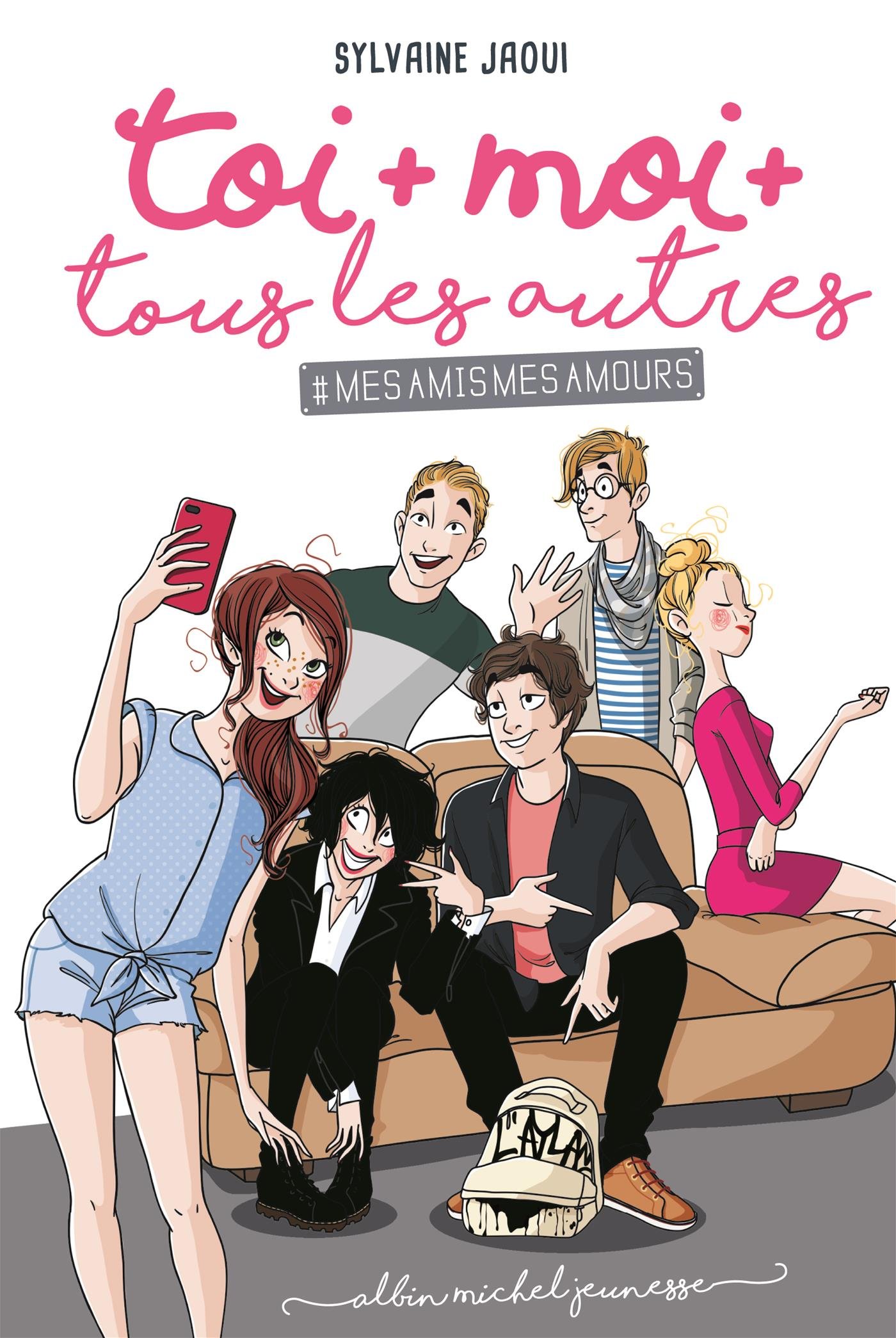
Of course, what I was reading was the writer’s take on French teenagers, but it gave me something that I couldn’t have got any other way – a French view on a French teenager. And after a while, it even started to be fun. For anyone who is reasonably fluent in French I’d recommend giving the book a try. It's interesting and funny and engaging. It’s Toi + moi + tous les autres, Tome 1 : #MesAmisMesAmours* by Sylvaine Jaoui. As it is not (yet?) translated into English, this is your only way of reading it.


Now I want to make myself continue with this reading outside my comfort zone, although the suggestion from my fellow writing-retreater that I give horror a try might just be a step too far … Does anyone have any less scary suggestions?

*You + me + all the others, Volume 1: #MyFriendsMyLoves