Sunday, 19 February 2012

Liebster Award and Peter Pan


At Novel Points of View we are delighted to receive a Liebster Award from writer and blogger extraordinaire Rosemary Gemmell. 

Apparently the award recipient should give five facts about herself but as we are five writers we’re giving one fact each!

Gwen Kirkwood: My favourite colour is royal blue. My birthstone is a sapphire and I have sapphires in my engagement ring.

Gill Stewart: The country I’d most like to live in is Scotland but the country I’d most like to visit is South Africa.

Jenny Harper: I have a guilty pleasure: Häagen-Dazs Chocolate and Pralines ice cream - I can eat a whole tub!

Mary Smith: I was – many years ago – school high jump champion for four years in a row.

Linda Mitchelmore: I have a weakness for Prosecco.... I was introduced to it on a writing holiday in Italy by a young American girl called April. I never drink it without thinking of her.

We’d like to pass the Liebster Award to ChocLit Authors  and to Heroine Addicts, both excellent blogs of interest to writers and readers

So now you know a little bit more about us, on with the blog, coming this time from Mary Smith

Birthplace of Peter Pan
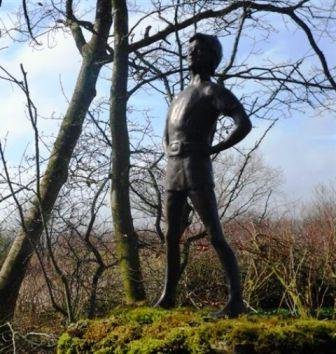
I have just attended an evening of jazz played by Gentle Jazz, a popular band based in Dumfries & Galloway, along with vocalist Terri Farley. The event was to raise funds for the Peter Pan Moat Brae Trust which aims to create Scotland’s first Centre for Children’s Literature in Moat Brae House, Dumfries, south west Scotland.

It was the garden of Moat Brae House which gave J M Barrie the inspiration for Peter Pan. As a child Barrie was a pupil at Dumfries Academy and he played in the garden of nearby Moat Brae. The house was designed in 1823 by the architect Walter Newall who was born in New Abbey near Dumfries and who was also responsible for designing Glenlair House near Corsock, home of the scientist James Clerk Maxwell.

Moat Brae was built for a Robert Threshie of Barnbarroch. The house changed hands several times and in 1863 was sold to Henry Gordon, a solicitor and bank agent in Dumfries. His sons, Henry and Stewart befriended J M Barrie was a frequent visitor to their home. The house, however splendid the interior with its square central hall, circular first floor gallery and a domed glass roof, was of less interest to the young Barrie than the garden where the three boys played. It was this garden which was to inspire Barrie in later years to write the story of Peter Pan and Neverland. When he visited Dumfries Academy in 1924 Barrie told his audience: “When the shades of night began to fall, certain young mathematicians shed their triangles, crept up walls and down trees, and became pirates in a sort of odyssey that long afterwards was to become the play Peter Pan. For our escapades in a certain Dumfries Garden, which is an enchanted land to me, were certainly the genesis of that nefarious work.”

The house was turned into a nursing home in 1914 and when it closed in 1997 the building was left locked and empty, at the mercy of vandals who broke windows allowing pigeons to move in and continue the destruction. In 2009 it was decided to demolish the house – and it was at this point a group of local people took action and, with actress Joanna Lumley at their head, launched a campaign to save Moat Brae.

They succeeded in purchasing the house and garden – literally only three days before the bulldozers moved in. In a way, that was perhaps the easiest part for now the Peter Pan Moat Brae Trust faces the monumental task of raising between £3-4 million pounds to restore the building – and establish a national centre which will celebrate children’s literature through events, visiting exhibitions, workshops by authors, illustrators and story tellers. The riverside garden, where J M Barrie played, will be developed into an educational play area for children based on the Peter Pan story and where every plant tells a story.

There have already been many fundraising events such as the evening of gentle jazz I enjoyed and lots more events are being planned by all kinds of groups and people enthusiastic to see the birthplace of Peter Pan restored and in use.

The Trust has a website at www.peterpanmoatbrae.org where there is lots more information about this exciting project. Many thanks to Peter Pan Moat Brae Trust and Graeme Robertson for use of the pictures.

Saturday, 11 February 2012

The facts about coincidences


We're told very firmly as novelists that coincidences are not acceptable in novels because they are unbelievable. I guess that, as a reader, it's true that coincidences in fiction can be irritating. Like stumbling into that handsome man again in the supermarket/pub/park or finding your new boss is the man you indiscreetly had a one-nighter with last week.

But in life they do happen. It's really not unusual to bump into a near neighbour when you are walking along the deserted beach in the Maldives, or locking yourself out of your house and being handed a parcel from the postman containing the spare key your brother pocketed on his last visit.

Some people believe that coincidence is really synchronicity – that the oddity of something happening at the exact time and place where it it most useful (or perhaps disturbing?) is in some way 'meant' to happen. It's karma.

I don't know about that, but here's a little tale for you. Some of you will remember that last year my husband Robin and I took part in a show called Bargain Hunt on BBC television. We had a ball, and actually managed to make a small profit (£85) on our buys when they were auctioned. One item Robin fell in love with was a Murano glass vase made in the 60s. We didn't buy it, but he was thrilled to discover that our expert, Nick Hall, had purchased it as his 'bonus buy'. It made a tidy profit. We decided to keep our winnings and spend them either in Anita Manning's auction house in Glasgow (where our items were sold) or at the Antique Fair near Edinburgh where we purchased them. Today was our first chance to revisit the scene of our experiences. Coincidence one: the Bargain Hunt Team was filming again. Coincidence two: we spotted the Murano vase up for sale again!

Dear blog readers - we bought it (for less than it was sold in Glasgow). And we chatted to mein host, Tim Wonnacut, who grabbed a film crew and filmed our little story, complete with vase.

Coincidence? Synchronicity? Karma? Who knows - but I think I feel a short story coming on!

PS If we hear they will use the clip, I'll let you know in a month or two.

Friday, 10 February 2012

IF YOU’RE A WRITER – WRITE

I’ve thought a lot recently about what it means to be A Writer. Not so much about writing as about being a writer.

Sometimes it seems that being a writer means having something – anything – published. And having something published is good, don’t get me wrong. But I’ve come to the conclusion that for me being a writer is, above everything, about writing. If I’m not writing I’m not A Writer. And more than that I’m not me.

There are courses that encourage you to only write the best you can write, or to write morning pages every morning no matter what, or to send everything you write out to magazines/publishers/agents.

These things can work for some people. I’ve tried various routes – only writing when I feel inspired, going over things I have written until I’ve edited them to death, writing a daily journal, writing only fiction. And I’ve found that it doesn’t matter exactly what approach I take – as long as I’m writing. Mostly in the morning, mostly every day, mostly fiction – but above all writing all the ideas and stories that are in my head. Sometimes I can’t think my thoughts until I’ve typed them. Weird I know - but true for me.

One thing I’ve learnt is to let myself write what I want to write. I may have an outline I’m working towards, and that can help – or it can be ignored. I may have no idea what I’m doing. But strangely as soon as I put pen to paper or fingers to (icy) keyboard, I realise there are words there waiting to be written down. Sometimes I can make something pretty good out of them. Sometimes they just make me smile and aren’t to be shared. Sometimes they are complete rubbish. But that’s fine. They’re mine and they’re an experiment in this writing life I lead.

The conclusion I’ve reached is that if you don’t write, you aren’t a writer. So the answer is – write! Try and do a little every day. A little may turn in to a lot, or may not, but it will still be something.

And if you’re like me, your life will be a little richer for doing it.

Saturday, 4 February 2012

OFF DUTY - LINDA MITCHELMORE PONDERS IF SHE EVER IS


Are writers ever off duty? I ask. You know - the way doctors always respond to that cry 'is there a doctor in the house' and stop on their journey to wherever they might be going to tend to some poor soul who has fallen in the street? Is there some sort of unwritten/unspoken oath a writer takes to absorb copy wherever they go?
Take the experience of my writer friend - let's call her X. She rang and said could I go over. Now. Right this minute. She had something she had to get off her chest and I was the only one of her (local) writer friends who would understand. So, rather anxious and taking a bottle of wine to drown sorrows if sorrows needed to be drowned, I went. X had not long been widowed after nursing her much loved and loving husband for the better part of a year. What might she be about to tell me?
"I feel terrible," she said, the second she opened the door to let me in. "Promise you won't hate me."
"Promise," I said.
Now, I never, ever, break promises unless there's some outside influence that means I have to - like bad weather closing roads and railways so I can't get to wherever it is I've promised to be.
But I nearly broke that promise because I have to say I was shocked at what she had to say. X, her voice barely a whisper, told me that as she held her dying husband's hand she knew there was a part of her brain that was recording everything in case it might be useful to her writing later.
Well, dear reader, it was.
I've just said I was shocked - but should I have been? X has written millions more words and is much more widely published than I am. But as my word count mounts up I find myself remembering things I thought I'd forgotten. Or consiously putting a very personal memory from long, long ago - long before ever I thought to get my words in print - into a short story. One of those personal memories was my father telling me that when he was in Italy during the war he was surprised to find orange trees growing on some of the railway stations. Oh yes? I thought at the time.
But...I wrote - and had published some 40 years later - a short story in which I wrote about orange trees greeting my heroine on a railway station. I hadn't even been to Italy at that time! But, when I did get there I saw for myself that yes, there were indeed orange trees on some railway stations, albeit the very bitter variety.
I'm fortunate in that I've only ever known real fear once - the night my daughter (then a teenager with all the angst that some teenaged girls get) went missing. It was October. Wet and wild and cold. I remember thinking at the time that I would never forget that dreadful fear - and I haven't. However, I can conjure up that feeling if ever I need to when writing fiction - and I get that shoulder shudder, that icy ripple up my spine, that jagged breathing, when I do.
These days I find myself conciously, in many situations, stepping back a little - mentally, that is. I log the mood, the scent, the colour, the temperature and at some time hence I will find all those things falling into a story.
I often wonder if others notice I do this If they notice I'm not 'with them' as it were? The truth is I'm probably more 'in the moment' than they are.
This morning my husband said he fancied a long walk across the beach and over the cliffs. Did I want to go? (I was doing some editing at the time). Well, I couldn't get my hat and coat and boots and gloves and scarf quickly enough, because as he spoke there was a flurry of snow outside. I rarely set stories in cold weather. Perhaps it was time I did?
Well, the walk was good. Very good. Hardly a soul about. The rough seas of the previous day had littered the beach with razor clam shells and starfish and crabs of varying sizes. And mountains of seaweed piled haphazardly.
"Glad I dragged you out?" my husband said.
"Very," I replied.
Excuse me.....I feel a short story coming on..............

P.S. My daughter was found safe and well!

Sunday, 22 January 2012


  Check, check, and check again.


So here we are already into the middle of January 2012. Another year with new ideas awakening and beginning to blossom like the first spring flowers in my garden.

In my case there was no time to think of new ideas because I had one final check to make on my current novel - the printer’s proofs. They arrived as soon as the postal service got back to normal after the New Year holiday. At this stage there should be no major changes made by the author, only corrections to any errors the typesetter may have made, such as accidentally transposing the letters in a word, or missing out a word or punctuation. Some authors start at the end of the book and work backwards to ensure they are really checking each word and not just reading. I check mine line by line using a ruler. The author can be asked to pay if he/she wishes to make changes at this late stage, especially if taking out, or adding phrases affect the page layout.

The last time for changes is during the copy editing stage. Most writers will admit that we see what we think we have written, and often miss mistakes such as changing the name of a character, or their hair or eye colour, mid-way through the book, or simply using a favourite word too often. Usually a good copy-editor will pick up these mistakes, but not always. It is crucial that the author should examine carefully any changes or corrections made by the copy-editor. This is the last chance for the author to check and make any changes, but by this stage major alterations should not be required.

I am sure most of you will have heard of the Australian publisher who had to destroy a large number of copies of a cookery book. Presumably both copy-editor and author overlooked the following error. “Add salt and a pinch of ground black people to the mix.”

It might have been laughable but it was a financial loss.

The topic of copy-editing is being raised again and again now that more people are using the internet for self-publishing for digital readers. Also many, like myself, are making changes to early books, hoping our writing has improved with the years. These too need the scrutiny of a copy-editor if irritating mistakes are to be avoided and punctuation used correctly. This week I read that an agency, known to many of you, charges five pounds per thousand words. Some charge two hundred pounds for a full length novel, presumably up to a maximum length.

This blog post was not intended to cover digital publications but since I have mentioned them I should add that a good book jacket is another essential and a cost unless you can do it yourself. Almost anyone can set up as a digital publisher so it is safer to check whether they provide marketing and copy editing, and the other tasks undertaken by reputable book publishers, before committing your precious work to their care.

This cheeky chappie was a gift from my youngest grandchildren to cheer me up and spur me on.


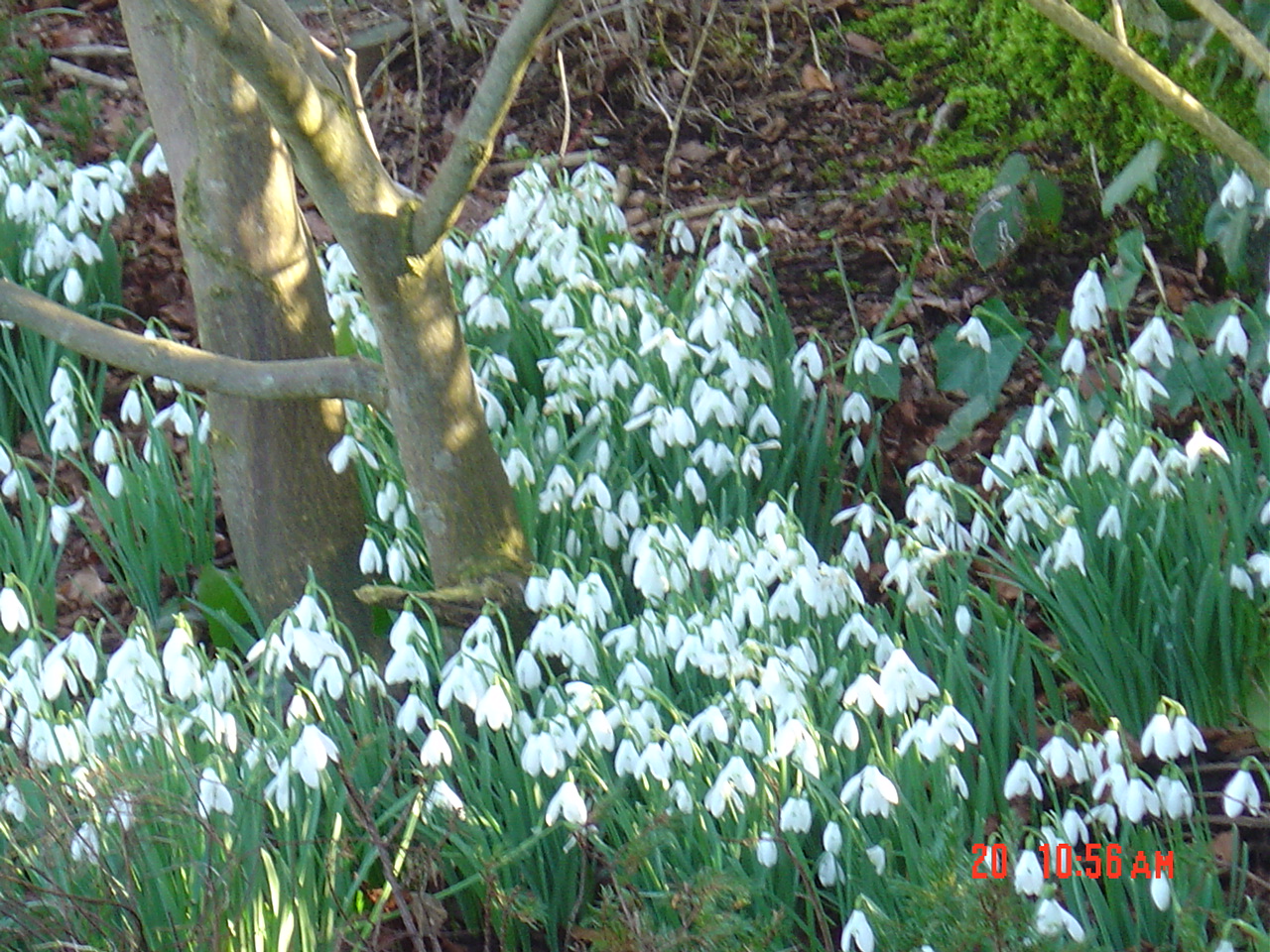
Viburnum blooming bravely through the winter - a sign of perseverance which all writers need.


Sunday, 15 January 2012

Libraries


Linda Mitchelmore’s post over Christmas triggered off lots of memories for me, especially about parcels from Canada and going to school in my sticky-out petticoat which was way too long. In the way memory ambles off down different byways that one triggered another.


Not long after I had started in primary three I, a voracious reader, had read all the books on the classroom’s lending shelf. Yep, one shelf of books was all we had – for a whole year. My father asked about membership to the local library but in those days for some reason a child had to be 10 years old before being allowed to borrow books from the children’s section. I was only seven. Maybe they thought 10 was the point at which the risk of scribbling in books passed, or that a child’s brain had sufficiently developed to be given unlimited access to books?

The first public library was Innerpeffray Library, established in 1680 as part of a school. The poet Allan Ramsay set up a circulating library in Edinburgh in 1725 and the miners’ libraries of Leadhills and Wanlockhead are the oldest subscription libraries. In 1853, the Public Libraries Act of 1853 came into force allowing taxes to be used to fund public libraries. Apparently growth was slow with some people objecting to their taxes being used for such a purpose.

My wonderful P3 teacher, Miss Irving, entered the fray and I was given permission to join. I can still so clearly see the little brown cardboard pocket with my name on the front. There was a diagonal cut across one corner. These were kept in a long wooden, shallow container on the librarian’s counter. Each book had an oblong ticket with the book’s details. This oblong ticket was put into the pocket when a book was borrowed and replaced inside the book’s pocket when it was returned. I have a feeling it might even have been a quicker system than the electronic one used today!

So, there I was, aged seven standing in front of shelves of books, literally spoilt for choice. The library had almost closed by the time I made my first selection. The highlight of my week was the trip to the library on late night opening. My parents were both avid readers – my mother of detective novels, my father of just about everything (except detective novels). My mother never went to the library so dad had the task of choosing her four books each week. He could never remember which ones she’d read and took to putting a pencil tick inside the back cover of every book he took out for her.

Nowadays, of course, parents are encouraged to take their children to the library before they even reach school age and libraries cater for their young customers with a whole range of colourful picture books. Libraries often have story telling sessions for tots which involve much laughter and clapping – the sort of thing which would have been frowned on in the days I joined the library. They really were silent places but why would anyone need to chat when faced with the delicious task of choosing books?

Over the years, the library gave me freedom – to inhabit other worlds, to go on adventures, to lose myself in the joy of reading. Meeting up with a cousin recently she said she always remembered me as having my nose stuck in a book. ‘Going to the library’ was always something I was allowed to do without having to answer twenty questions on the who with, what will you be doing, when will you back theme.

My reading was never censored at home although I remember dad being quite upset when he discovered I’d read one of the books he’d borrowed. I can’t remember the title but I will never forget the contents. It was by a survivor of Auschwitz and I was transfixed and appalled by the unimaginable horrors into which I plunged. Dad was concerned I was too young to know about such things but I’d read it and such things can never be un-read. I think my recurring nightmare of hiding in a corner of the attic listening to the tramping boots coming towards the house began then.

Now, I have to confess for many years I let my library membership lapse. For part of the time I lived abroad but even when I came home I did not immediately re-join the library. I’m not sure why – books were cheaper to buy, I suppose. And I like owning books I don’t have to give back. It was only when much noise was being made about closing libraries a year or so ago I stirred myself into becoming a member again.

Apparently around 42 million items are loaned through Scotland’s libraries each year: not only books but videos, CDs, DVDs, computer software, audio books. My library looks very different from when I joined 50 years ago (did I really just say that – 50!) – bright, cheerful, not silent and computers are dotted around the place.

Still, when standing in front of all those books – spoilt for choice – I can still feel the same sense of sheer delight I felt all those years ago.

Saturday, 7 January 2012

Characters from nature

Watching the unbelievably beautiful Earthflight on BBC the other night, I was reminded of a thought I had during Frozen Planet. On that programme, I laughed out loud to watch a thieving penguin craftily stealing stones from his neighbours – then defending his stolen hoard with all his strength as his puzzled victims eyed their diminished fortifications. On Earthflight, I was watching vultures trying to get access to a wildebeest carcass in the face of defence from a lion, storks and a hyena. Hilariously, the vulture decided to tiptoe round the back in the futile hope it wouldn't be spotted. If you haven't seen a vulture tiptoeing, I suggest you catch it now, on iplayer. David Tennant, who was narrating, commented that 'vultures never stay still' because they are always dodging out of the way of attacks.

Now, in both these cases, it didn't take much to extrapolate from animal to human behaviour. In the case of the vultures, I was reminded of the classic description of the shadowy underworld figure, eking out a living by "duckin' and divin', dodgin' and weavin' " – just like the vulture.

And why are scavengers generally so ugly? They seem to be almost caricatures of themselves – gawky, rough-looking, dirty, rough-furred or patchily feathered.

By contrast, watching the flamingoes dancing was the most extraordinarily beautiful sight. Like pink-tutu-ed ballerinas they moved in stately and graceful synchronicity, legs, necks, heads mirroring that of their neighbours. And seeing how gannets worked as a team with dolphins to catch sardines was truly awesome, with lessons to be learned about the common good (though not for the sardines, obviously).

I think I can justify glueing myself to these absorbing programmes. As well as being stunningly beautiful, revealing the intricacy and glory of our precious planet, they seem to offer boundless possibilities for the creation of characters for my novels!

Finally, in a footnote to Cally's blog last week, can I make the observation that one huge plus to e-books is that we can again get access to novels from our favourite authors that have been long out of print. Hats off to my friends and mentors Eileen Ramsay and Anita Burgh for taking the plunge and starting to upload their back lists!