Sunday, 16 August 2015

A Week Without Words

Many distractions...
I was going to write about words and how we hide behind them; but something got in the way. It’s called a holiday — and I suspect many of my fellow writers know that holidays are something we hide behind as well. I came away with my laptop; with a plan for a first draft (first few chapters complete); and a hard copy of a first draft, pending review. I had my editor’s red pen with me, together with a pile of notebooks (in the unlikely event that the laptop died and I ran out of paper) and I bagged the tiny room with a view of the garden as my study.

And then I didn’t do anything. Or not much, unless you count a rough thousand words that I daren’t read back, and a bizarre few hours spent flicking back through my published works and agonising about everything that I now realise is wrong with them.

You may think this is entirely reasonable, but for me it’s odd. Writing is a hobby. On a normal Sunday afternoon when there’s nothing else going on, I’ll rush for my laptop and scribble a few pages when everyone else is busy. I relax of an evening by doodling maps of fictional locations or drawing spiderweb diagrams of every character’s relationship with every other. 

And yet, on holiday, I don’t do it. I have tons of ideas, but I never write them up (or down). I wander around in a series of tiny dreams; and then I get back to wherever we’re staying and… reach for a Sudoku puzzle. Or flick through the nearest book. Or stare out of the window at the view (the English Lakes, this time, should you be interested, and a fine view it was, too).

It isn’t because there are distractions. There are distractions in everyday life as well, and I write around those — often, through them, or instead of dealing with them, because writing is a therapy as much as a relaxation. But maybe it’s the knowledge that there’s nothing I have to do that makes me do nothing — even when I want to.

I know I could be so much more productive while everyone else is snoozing in the garden or in front of the telly. But actually I wonder if my brain somehow understands that even a mind geared to writing needs a little break from time to time. 

If I’m honest I feel better for a week without words (of my own, at least). I’m refreshed and raring to go. Watch out, world!

Jennifer Young

Sunday, 9 August 2015

My new book by Mary Smith

I’m blogging about my new book, which comes out later this month. Dumfries Through Time, is a very different sort of book than anything I’ve done before. I’ve published fiction, memoir and poetry but this is a picture-led local history book about the town of Dumfries in south west Scotland. It comprises 90 pairs of images showing a historic location in Dumfries and a photograph of the same place today with a paragraph of text accompanying the pictures.

Fortunately, I didn’t have to take the pictures as the book has been done in collaboration with a fabulous photographer friend, Allan Devlin who does amazing landscape images. You can see some of his work on his website here.

Allan and I both freelance for award-winning magazine Dumfries & Galloway Life. In fact, we have both worked on the magazine since the very first issue in September 2006 and Allan always did the photos to accompany my features. Strangely, we did not actually meet until we’d been working ‘together’ for almost two years. 

Our first task was to source the 90 old images we needed. We spent hours – days – pouring over old postcards and photographs in the library, the museum and private collections. It was going to be fairly straightforward, we thought.
Statue of Robert Burns

Dumfries is strongly associated with Scotland’s bard, Robert Burns who lived for a time in the town, writing a huge number of poems and songs in the few years before he died there. There’s a fine statue of him, there’s his burial place, the church he attended, two homes he inhabited and, of course, hundreds of images of all those places. We would choose a postcard of the statue then a few minutes later we’d find another, perhaps a better one?  Or what about this one, from a different angle, or that one which was taken after the statue was moved? 


The River Nith winds through the town and along the Whitesands with its bridges, one of which, Devorgilla Bridge is one of the oldest standing bridges in Scotland. Again, many old images exist and we were faced with the daunting task of choosing the ones which we felt were best. We also had to be careful not to choose places which were no longer photogenic: there was no point in having a wonderful 19th century photo of a historic building only to realise there was actually no longer anything there. 
The weather was not kind to Allan who had the job of taking 90 photos on the days the sun came out – and this spring/early summer there were very few such days.
Statue of Robert Burns Today

My biggest problem was writing the captions, which initially I thought would be fairly easy to do. I’m a journalist, writing captions is part of my job. However, Amberley Publishing has an eighty-word limit on the captions. How could I reduce the history of the Whitesands – site of witch burnings, horse fairs and cattle market for centuries to 80 words? Allan must have been very fed up with my moaning about it.

I’ve collaborated with artists on projects which included writing poems but this was the first time I’ve done it on a book. I think (Allan might say different) we worked very well together. We have a slightly different attitude to deadlines. We both feel honour bound to meet them but each of us has our own approach and whenever Allan said: “Well, we’ll do what we can to get it done on time.” I wanted to scream. He probably felt the same way when I insisted we HAD to get it completed on time.

The only time we came close to an argument was over a last minute (and I mean last minute – one day from deadline) image of an amazing looking building, which Allan said was a bottling plant. I did some research and found the bottling plant – but it was not the picture he sent me. Emails flew back and forth in disagreement. I wanted to tell say: “Put your (fill in the blank) glasses on and look at it again.” Instead I emailed, in true architectural jargon telling him to note that the ‘squiggly, turrety things are different.’ Silence. He’d gone to bed. Next morning he emailed to say he thought I could be right.

The manuscript and images reached the publishers on time – thank goodness for email and dropbox – and Dumfries Through Time will be available from about the 15th of August. It can be pre-ordered through Amazon.

Allan and I will be celebrating with a launch event on Tuesday, September 01 in the Rutherford/McCowan Building at Crichton Campus, Dumfries. If you live anywhere nearby, do drop in - all welcome.

Saturday, 1 August 2015

Does investing in writing really pay off? by Jenny Harper

On Wednesday I gave my first Library talk. I was apprehensive, but I knew the audience would not be large and I was determined to give it a go. Thankfully, everyone seemed to enjoy it – and I even sold a few books!

I didn't want to rabbit on for too long (I dislike listening to myself talking), and was uncertain about what people would most like to hear. An experienced author told me that people love to know about you as a writer, so I gave a little background (writing from childhood, through the teenage years, put off by doing a degree in literature, small success in the 1980s but not enough income, and a subsequent career writing about everything from corrosion in central heating systems for British Gas to articles on the applied arts for newspapers and magazines).

I mentioned that I'd had the idea that writing novels might be a nice little earner in my retirement, which elicited hollow laughter from my husband when I practised my speech on him. He was right to be cynical – so far, I would say expenditure has outweighed income by a factor of several thousand to one, when you take into account all the course fees, books on writing, conferences, agency fees, association fees etc I have shelled out in the past few years.

But it also led me to think about just what all that money I've spent has done – and I really surprised myself.

  1. What I have learnt.  On my very first course (in Castle of Park, Aberdeenshire) I thought I could write, and that all I had to do was learn a little more about structuring a novel. After all, I'd been writing all my life – professionally for much of it. Right? Joke. With every book I have written (around eight now, I think), I have learned more and more. Some of this has come via courses, but a lot of it is down to simply writing. The more you write, the better you get.
  2. Friendships.  Starting with that first course – where I met the tutor Anita Burgh, Jo Thomas (now a best-selling author) and Elizabeth Garrett (whose seaside cottage I have been privileged to visit on many occasions), I have made friends not only in Scotland but quite literally all over the world. Writing is no longer a lonely business, it leads via the virtual world to the unlikeliest and richest of friendships.
  3. Experience.  I've learnt not just about the craft of writing, but also about the world of publishing and how it operates (and how it is changing it the digital world); about how to publish a book yourself in ebook format and in paperback; about social media and how to harness its power; about how to promote your own book in a digital world; about the American Inland Revenue Service – yes, you do need to enrol in order to get UK taxpayer exemption from US taxes; and many other surprising things. I've built my own website, written countless blogs for other hosts and hosted many writers on my own blog, learnt how to Tweet and use Twitter management tools, how to use Facebook, and about LinkedIn and Pinterest and Goodreads and a myriad other web-based sites and tools that would otherwise have remained a mystery.
  4. Publication.  Because I self published and became more confident about the fact that readers actually like what I write, I was offered a publishing deal. And that has led to a whole host of further new experiences. Being featured in my publisher's catalogue. Seeing my book cover prominently displayed at London Book Fair. Selling foreign rights. Hearing that my latest title is to be promoted by WH Smith Travel.
The list goes on. Not bad, eh? I haven't made my money back – not yet anyway – so perhaps as an investment it hasn't really paid off. But I do have faith in myself and, more importantly, my publisher has faith in me, and perhaps one day my pounds will multiply.

If they don't, what have I lost?

Truthfully? Nothing. I believe my investment has already been repaid a millionfold. I write professionally crafted, very readable books that people enjoy, my skills across many areas have improved out of all recognition and, most importantly, I am now the proud member of a worldwide community of writers.

Not a bad investment, don't you agree?


Sunday, 26 July 2015

THINGS THAT PUT ME OFF (WHEN READING A BOOK) by Gill Stewart


When there are so many books to choose from, why put your reader off with e.g. silly typos?

I’ve recently read a book published by an author who appears to sell well. It had many good points – great characters and setting, funny incidents that made you smile or even laugh out loud, but if I hadn’t been on a long train journey I doubt very much I would have finished it.

It contained two of my biggest bugbears:

      1)         Typos. Three major ones, where character names were used wrongly. That might not even count as a typo, rather just pure carelessness. It certainly pulled me right out of the story as I tried to work out why X was suddenly doing something when he/she wasn’t even supposed to be there.
      
      2)         Contrived plot/suspense. By contrived suspense I mean that the author, narrator and characters all know ‘something’. This something is hinted out to the reader but not actually revealed. This drives me mad. I can share a character’s suspense if they themselves really don’t know something, but I just can’t believe it when the character does know but the author is manipulating me to think something else.

In this particular book the hero was pining after a previous lover who had an androgynous name so it could have been a man or a woman. Nowhere in the first third or so of the book was he/she or his/her used in connection with this character. Clearly we were meant to be kept guessing. But why? The hero obviously knew. It didn’t add anything to the plot, just gave you a little thought ‘oh I wonder …’ which would have been fine for 4 or 5 pages but not a third of the book! And as soon as the lover is shown to be female the book is littered with use of the appropriate feminine pronoun in relation to her, so this obviously was completely contrived.

Black mark. Don’t play with your reader unless there is a point.

And that wasn’t the only example of contrived suspense, there were at least two others, so it was no wonder I wanted to scream at the book more than once.

The annoying thing was, apart from these issues, it was a good read. One that could have been made great by some judicious editing. This was a traditionally published book, so no excuse that there wasn’t an editor involved. It makes me wonder what went wrong. Lack of time? Experience? Training?

When you’re reading a book, what are the kinds of things that infuriate you (or, as I say more politely in the title, put you off)?

Saturday, 18 July 2015

IT'S MARRIAGE - BUT IS IT ROMANCE? By Linda Mitchelmore

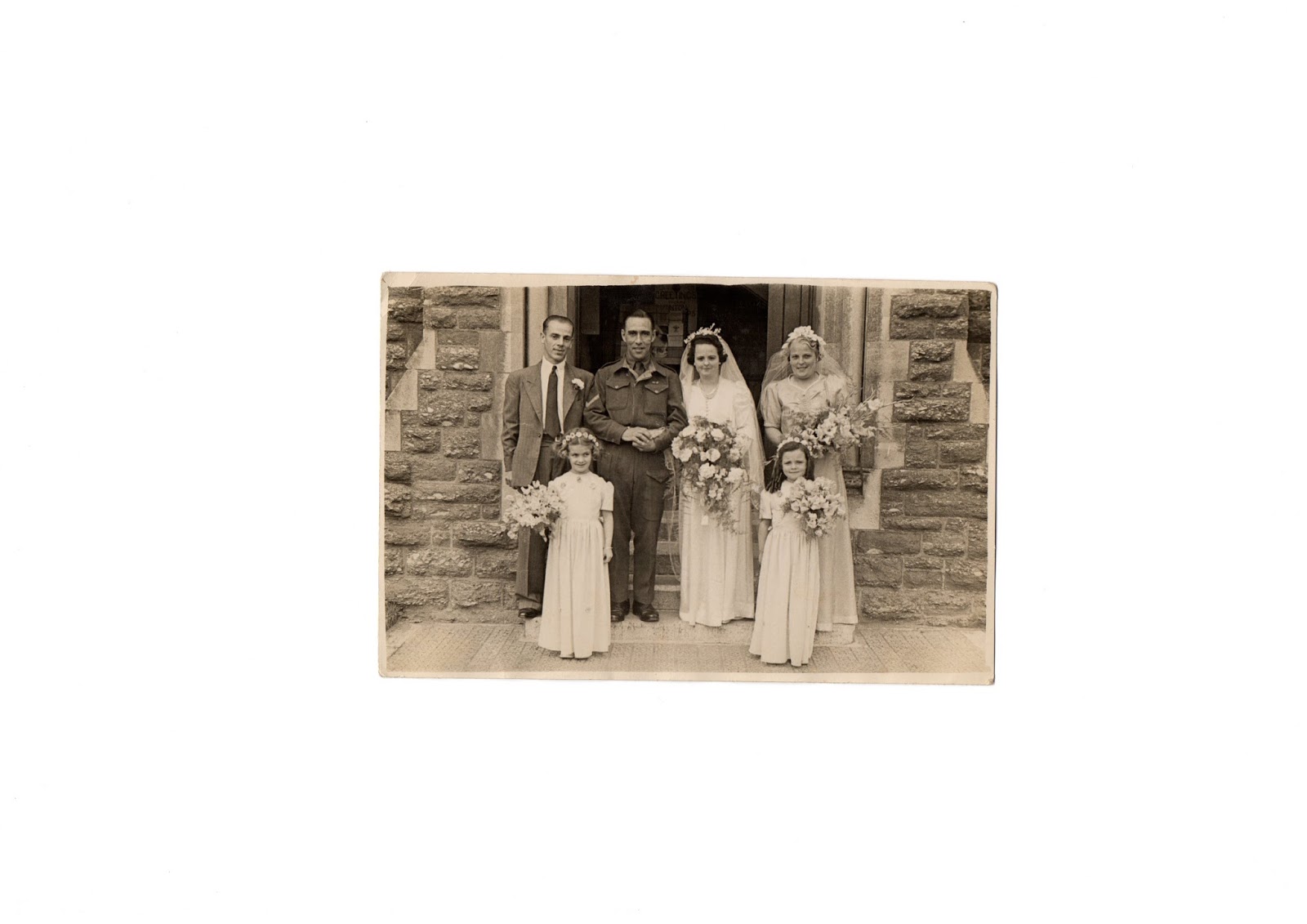
Today would have been my parents' 70th Wedding Anniversary, had they lived. They married in 1945 and I remember, as a thirteen-year-old (or thereabouts) asking my mother why she had married my father. I had never seen them kiss, or hold hands. Out walking, my mother (like the Queen) was always a few steps ahead of my father. My mother could be very snippy - sharp even. She rarely smiled and there was always a sadness around her somehow. My father, on the other hand, was gentle and laid-back - almost comatose at times - and full of jokes and funny phrases; one of of his favourites, when I got back home from wherever I'd been, was 'Hello, love. How's your bum for spots?'. If my mother was giving him grief about something he would listen for a while then put up a hand and say, with a beaming smile,'Shut up, love, and give us a kiss.' My mother would say, 'Oh, you!' and whatever it was she'd been on about was forgotten. It was hard for me - deep into my Georgette Heyer reading period - to see how there could ever have been romance, of the fast-beating hearts and flowers variety, between them. So, what answer did I get to my question? 'We'd been through a war and there weren't many men around. And your dad was handsome. And besides, he bought the material for my wedding dress in Italy in the middle of a war before he'd even asked me to marry him, so what else could I have done when he turned up on the doorstep with it?' I like to think that was a tongue-in-cheek answer but I can't quite believe it was. I don't remember them ever buying one another a birthday card or a present. For Christmas every year my mother knitted my father a pair of socks in 3ply wool on four needles. My father forked out for a bottle of Chianti in a raffia holder because it reminded him of his time in Italy and that Chianti was the only alcohol that entered the house all year. I've read recently of someone who has found lots of love letters her parents sent to one another, full of longing and love, and romantic writing - all I found was household bills (paid, of course). And yet ... they were a team. My father's last words to me as I left his hospital bedside (not expecting him to die that night) were 'Look after your mum, love.' I did. My mother's last words to me were, 'I'd love to see your dad, just one more time.' And then she, too, was gone. I don't think I've consciously used my parents' lives in any of my novels and yet ... that wedding dress story has had an airing, the funny phrases have seen the light of day again, poignant last words have been written. Thanks for listening. And here they are on their wedding day.

Sunday, 12 July 2015

The World Gone Mad: Amazon's Review Policy

Exhibit A....
Oh, Amazon! What is your game?

There’s a bit of a flutter on social media at the moment as people — writers in particular — become increasingly outraged that Amazon is apparently (I only say apparently because it hasn’t actually happened to me — I don’t doubt that it is happening) deleting reviews, and preventing posting of any more. In the words of an email sent to at least one author, this is on the grounds that “your account activity indicates that you know the reviewer”. 

People review their friends’ books as well as those by strangers! Who knew? They do it, of course, in much the same way as they might visit the teashop their friend runs (equivalent to buying the book), or recommend their curtain making or beauty therapy businesses (equivalent to leaving a review). Your friend has a good project and you want people to know about it. There’s nothing wrong with that.

Authors love authors. They gravitate towards one another. They are their friends for all sorts of reasons, but one of them is that they love books. And authors read each other's books. They leave reviews to give a fellow author a helping hand. Reviews are their life blood (and Amazon needs them, too). It’s standard practice to send  book to a stranger in return fro an honest review. That’s been going on since book reviewing began. Does that mean you know the reviewer?

While some writers do give five star reviews of poor books in the expectation of reciprocal praise for their own third-rater (which is one reason why I never agree to trade reviews), it doesn’t apply to everyone. And these kind of relationships are NOT those which are easily picked up by Amazon, because they might be conducted (say) in Facebook review groups between people who have no other connection and who may well review under a different name.

I don’t review many books — not as many as I intend to — and I’ve always been open about the fact that I prioritise books by people I know AND those which I think deserve four or five stars. That doesn’t mean my reviews aren’t honest because I know the author.  Here’s the first paragraph from the first review I ever wrote:

Exhibit B...
“I'm not going to lie. I'm not a fan of Regency novels and I am a friend of Anne Stenhouse. These two facts are linked because I picked up Bella's Betrothal only because Anne wrote it. I wasn't going to review it either. Then I read it.”

In the light of that I’ve been expecting my reviews to be struck off. Sure enough just a few days ago Amazon emailed me on the subject of Anne Stenhouse’s books…inviting me to contribute a review of her latest.

I have no idea what Amazon’s trying to do with its new review policy; but the really frightening thing is that I don’t think Amazon knows, either.

Thursday, 2 July 2015

Dozens of free books in this July only Rafflecopter draw – don't miss!


During the whole of July, The Fussy Librarian is running a Rafflecopter promotion – 29 best-selling authors are giving away lots of copies of their books, every day. 

Two Novel Points of View bloggers are participating – Jenny Harper is  giving away 5 e-copies of her latest Heartlands novel, People We Love, on the 18th,  and Mary Smith is offering free copies of No More Mulberries and Drunk Chickens and Burnt Macaroni  on the 24th.

So be sure to hop on over and enter the draw!